-cropped.svg)
.svg)


- The framing most practices are stuck inside
- Where the delay is actually created
- Why this hits specialty procedural practices harder
- The three failure patterns that create most delays
- What eliminating delays actually looks like
- The metric that actually tells you if you have a PA delay problem
- The build-versus-embed decision practices get wrong
EXECUTIVE SUMMARY
Prior authorization delays in specialty practices are not caused by slow payers or understaffed teams. They are caused by a single structural condition: coverage requirements are unknown at the moment the appointment is scheduled. Practices that eliminate PA delays do so by surfacing authorization requirements, documentation criteria, and payer-specific rules before the patient is ever booked, not after. This is not a staffing fix. It is a timing fix.
The framing most practices are stuck inside
When a prior authorization takes 14 days, the instinct is to ask how to speed it up. More staff on follow-up. Automated status checks. Faster fax-to-portal migration. These interventions reduce friction inside the delay, but they do not eliminate the delay itself. According to MGMA research, prior authorization ranks as the single greatest administrative burden facing medical practices, with the average practice spending more than two business days per week on PA-related work. That burden is a symptom of a structural problem, and optimizing the response to a structural problem is not the same as solving it.
For specialty procedural practices, where a single authorization failure can mean a rescheduled surgical case, a delayed injection sequence, or an unbillable procedure room slot, the cost of that distinction is measured in thousands of dollars per incident rather than administrative inconvenience.
The practices that have actually solved this problem asked a different question: why does the delay exist at all? The answer is almost always the same. By the time the authorization request was submitted, the outcome was already determined by decisions made days or weeks earlier, when no one had the information needed to make them correctly.
Where the delay is actually created
Prior authorization delays have a specific origin point, and it is not the payer's review queue. It is the scheduling conversation.
At the moment a procedure is booked, three things need to be true for the authorization to move cleanly: the practice knows whether this procedure requires authorization from this specific payer and plan, the practice knows what clinical documentation that payer requires to approve it, and the practice has a realistic read on whether that documentation exists or can be assembled in time.
In most specialty practices, none of these three conditions are confirmed at scheduling. Authorization requirements are looked up later, often by a different staff member, often from a portal or PDF that may be outdated, and often under time pressure. Documentation is assembled against criteria that were never fully validated. Submissions go out with gaps the practice did not know existed.
The payer then does exactly what it is supposed to do: it asks for what is missing, or it denies outright. What the practice experiences as a delay — the back-and-forth, the peer-to-peer request, the resubmission cycle — is actually the resolution of a problem that was locked in at scheduling. No amount of follow-up speed can fix a structural condition that was created before the submission ever existed.
Why this hits specialty procedural practices harder
General medical practices deal with prior auth volume. Specialty procedural practices deal with prior auth complexity, and the distinction matters enormously for how the delay problem presents and how it needs to be solved.
According to the AMA's 2023 prior authorization physician survey, physicians and their staff spend an average of 14 hours per week managing prior authorization requirements, with 93% of physicians reporting that PA requirements have led to care abandonment in at least some cases. For specialty procedural practices, where procedures are higher-value, payer rules are more granular, and documentation requirements are more clinical, that burden concentrates in ways that create disproportionate revenue risk relative to practice size.
The cost of a failed authorization in a surgical specialty is measured in thousands of dollars of lost or delayed revenue. A GI practice submitting authorizations for colonoscopies and endoscopic procedures is dealing with a fundamentally different authorization landscape than a general internist requesting a specialist referral. Payer rules for endoscopic procedures vary by plan, change without notice, and often require documentation that bridges clinical and administrative language in ways that are not intuitive for either the clinical team or the billing team.
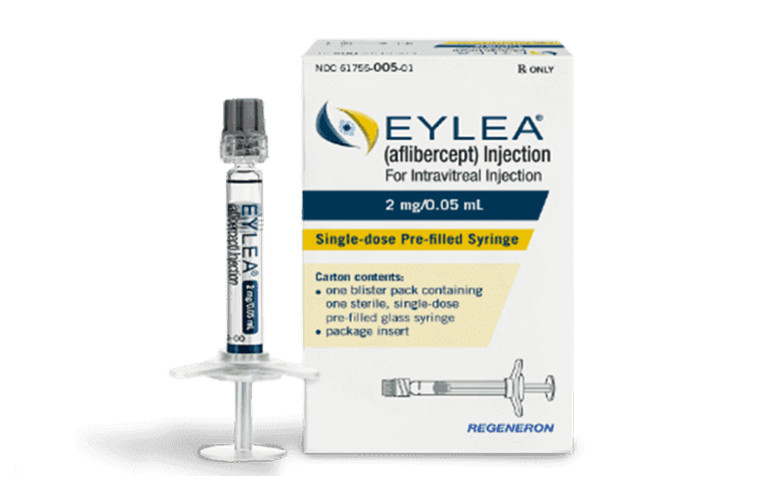
The same dynamic applies to ophthalmology practices managing injection protocols under step therapy requirements, orthopedic groups navigating implant authorizations with procedure-specific coverage rules, and cardiology practices dealing with device-specific payer criteria that shift by plan tier. In all of these environments, the relevant question is never simply whether a procedure requires authorization. It is whether this specific CPT code, for this payer's specific plan tier, for a patient with this benefit configuration, requires authorization, and if so, what exact documentation package satisfies that payer's clinical review criteria. That question cannot be answered reliably through manual lookup. It requires real-time coverage intelligence embedded at the point of scheduling.
The three failure patterns that create most delays
Across specialty procedural practices, PA delays trace back to three recurring conditions, and all three are preventable when coverage requirements are surfaced before scheduling rather than after.
Requirements discovered late. The practice learns that authorization is required after the appointment is already on the books. The clinical team is asked to produce documentation retroactively, the timeline compresses, the submission is rushed, and first-pass approval rates drop as a direct consequence of the timing failure rather than any clinical deficiency.
Documentation assembled against the wrong criteria. The practice knows authorization is required but assembles documentation against general clinical standards rather than this specific payer's review criteria. The submission is clinically complete but administratively incomplete, the payer requests additional information, and what should have been a straightforward approval extends into a multi-week exchange.
Payer rule changes that were never surfaced. A plan updated its authorization requirements for a procedure class 60 days ago. The practice is still operating on the old logic, and submissions that used to move cleanly are now being pended or denied for reasons no one on the team can immediately identify, because the change was never visible in the workflow.
Every one of these failure patterns originates upstream of submission, and every one of them is addressable by ensuring that coverage requirements are known before the scheduling conversation ends rather than discovered during the preparation process.
What eliminating delays actually looks like
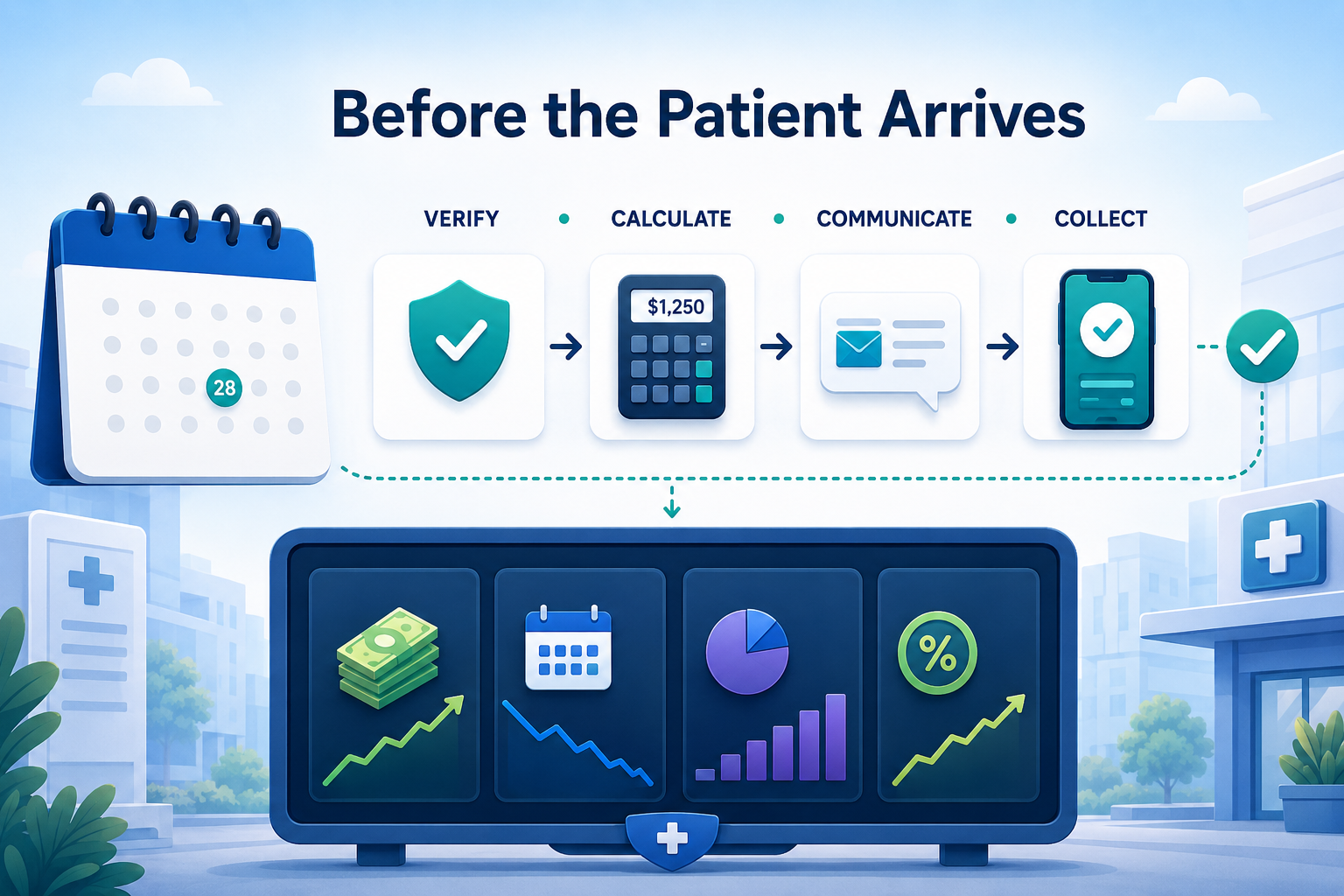
Practices that have structurally reduced PA delays share a common operating shift: coverage requirements enter the workflow at scheduling, not at authorization preparation.
In practical terms, this means that when a procedure is booked, the system surfaces whether authorization is required for that specific payer, plan, and procedure before anyone has to look it up. When authorization is required, the system identifies what documentation that payer's reviewers will need to approve it before clinical documentation is finalized. When a payer updates its requirements, that change becomes visible immediately rather than being discovered through a denied claim three weeks later.
The staff time does not disappear, and authorization preparation still requires human judgment. But it is human judgment applied to complete information at the right moment rather than incomplete information under deadline pressure. The result is not faster authorization processing. It is fewer authorization cycles. Cases that used to require two or three submission rounds move on first submission. Cases that used to generate peer-to-peer requests get approved without escalation. The delay does not shrink — it stops being created in the first place.
For a real-world example of what this shift looks like in a surgical specialty context, Northstar Medical Management reduced PA determination time from 20 to 30 minutes per case to under 10 seconds, not by moving faster but by having the right information at the right moment. Rocky Mountain Eye Center reduced its net PA denial rate to 1.9% in an ophthalmology practice where injection protocol authorizations had previously created a persistent backlog.
The metric that actually tells you if you have a PA delay problem
Most practices measure authorization performance by denial rate or days-to-decision, but these are lag indicators. By the time they move, the problem is already weeks old and the revenue impact has already been absorbed.
The more useful leading indicator is first-pass authorization approval rate, tracked by payer and by procedure class. If your first-pass rate is below 85% on a given procedure, the question to ask is not why the payer is slow but what information was missing from the submission. The answer to that question almost always points back to the scheduling-to-preparation gap: requirements that were not fully known when the documentation work began. Tracking this metric by payer and by CPT cluster reveals the specific coverage intelligence gaps that are creating your delay pattern, which is a far more actionable diagnostic than aggregate denial rates.
The build-versus-embed decision practices get wrong
When practices recognize the scheduling-to-authorization gap, the natural first response is to build a better internal process. A more detailed intake checklist, a requirements matrix organized by payer, a dedicated pre-authorization coordinator role. These investments are not wrong, but they are insufficient for a specific and predictable reason: payer requirements change too frequently for any static document to stay accurate. The requirements matrix that was complete in January carries errors by March and is materially outdated by June.
The practices that sustain genuinely low PA delay rates over time do not maintain requirements documents. They embed real-time coverage intelligence into the scheduling workflow, so that when a payer updates its criteria, the change surfaces automatically in the system rather than being discovered through a denied claim. This is the difference between a process improvement and an infrastructure upgrade. A process improvement requires continuous maintenance to remain accurate. An infrastructure solution gets more accurate over time as the underlying intelligence layer learns and adapts. For a deeper look at why this infrastructure layer has been missing from the revenue cycle technology stack until now, see The Missing Layer in Your Revenue Cycle Technology Stack.
Final Thoughts
Prior authorization delays are one of the most studied problems in healthcare administration, and one of the least effectively solved. The reason is not a lack of effort or investment. It is that the dominant approach — optimizing submission speed, adding follow-up capacity, building better tracking tools — addresses the wrong part of the problem. A study published in JAMA found that prior authorization requirements are associated with serious adverse events in a meaningful proportion of cases, a finding that reframes the delay problem as a patient safety issue as much as an administrative one. When the stakes include delayed treatment for patients alongside lost revenue for practices, the case for solving the problem structurally rather than managing it operationally becomes considerably stronger.
The delay is not created at submission. It is created at scheduling, in the gap between when a procedure is booked and when the coverage requirements governing that procedure are actually understood. For specialty procedural practices, closing that gap is not a process refinement. It is a foundational shift in how coverage intelligence enters the clinical workflow. The practices that have made that shift are not faster at managing prior authorization. They have largely stopped managing it the way the term implies — reactively, under pressure, against incomplete information. They have moved the work upstream, where it belongs, and the authorization process downstream has become correspondingly more predictable as a result.
That is what Coverage Intelligence makes possible. Not a better version of the same reactive workflow, but a different operating model entirely.
Most prior authorization delays are decided at scheduling, before a single document is assembled or a single request is submitted. See how Manta surfaces authorization requirements inside your scheduling workflow so your team knows what is needed before the appointment is ever booked.
→ See it in a live workflow - Book a Demo